Mathura and Vrindavan
Krishna's homeland on the Yamuna, an hour from Agra

Braj is the name for the country around Mathura, Vrindavan, Govardhan, Barsana and Nandgaon, where Hindu tradition places the birth, childhood and youth of Krishna. For pilgrims the whole landscape is sacred: the river, the groves, the hill of Govardhan and the lanes of Vrindavan, where temple bells sound from dawn until well after dark. The area sits on the Delhi to Agra corridor, about an hour and a half from either city.
Mathura is the older town, with the Krishna Janmasthan complex built over the traditional birthplace, the Dwarkadhish Temple and the evening aarti on the river at Vishram Ghat. It also has one of India's great sculpture museums, holding work from the Kushan period, when Mathura was a major centre of Buddhist, Jain and Hindu art. Vrindavan, 12 km north, is a town of thousands of shrines, from the packed Banke Bihari to the marble Prem Mandir.
There are no luxury hotels here, so most of our guests visit from Agra, with an early start and a late return. For Holi, when Braj celebrates for more than a week, or for the quieter evening rituals, we use the best simple hotels in Vrindavan or Mathura for two or three nights. A local guide is essential: temple hours are irregular, crowds can be intense and the meaning of each place depends on its story.
Highlights
What Mathura and Vrindavan does best
Holi here runs for more than a week. Barsana's Lathmar Holi, Vrindavan's flower Holi at Banke Bihari and the Dauji huranga the day after the main festival draw visitors from across India. Dates follow the lunar calendar, so check current status before you travel.
Mathura's main ghat, where Krishna is said to have rested after defeating Kamsa, holds an evening aarti with lamps on the Yamuna. It is smaller and more local than Varanasi's, and a boat from the ghat gives a close view.
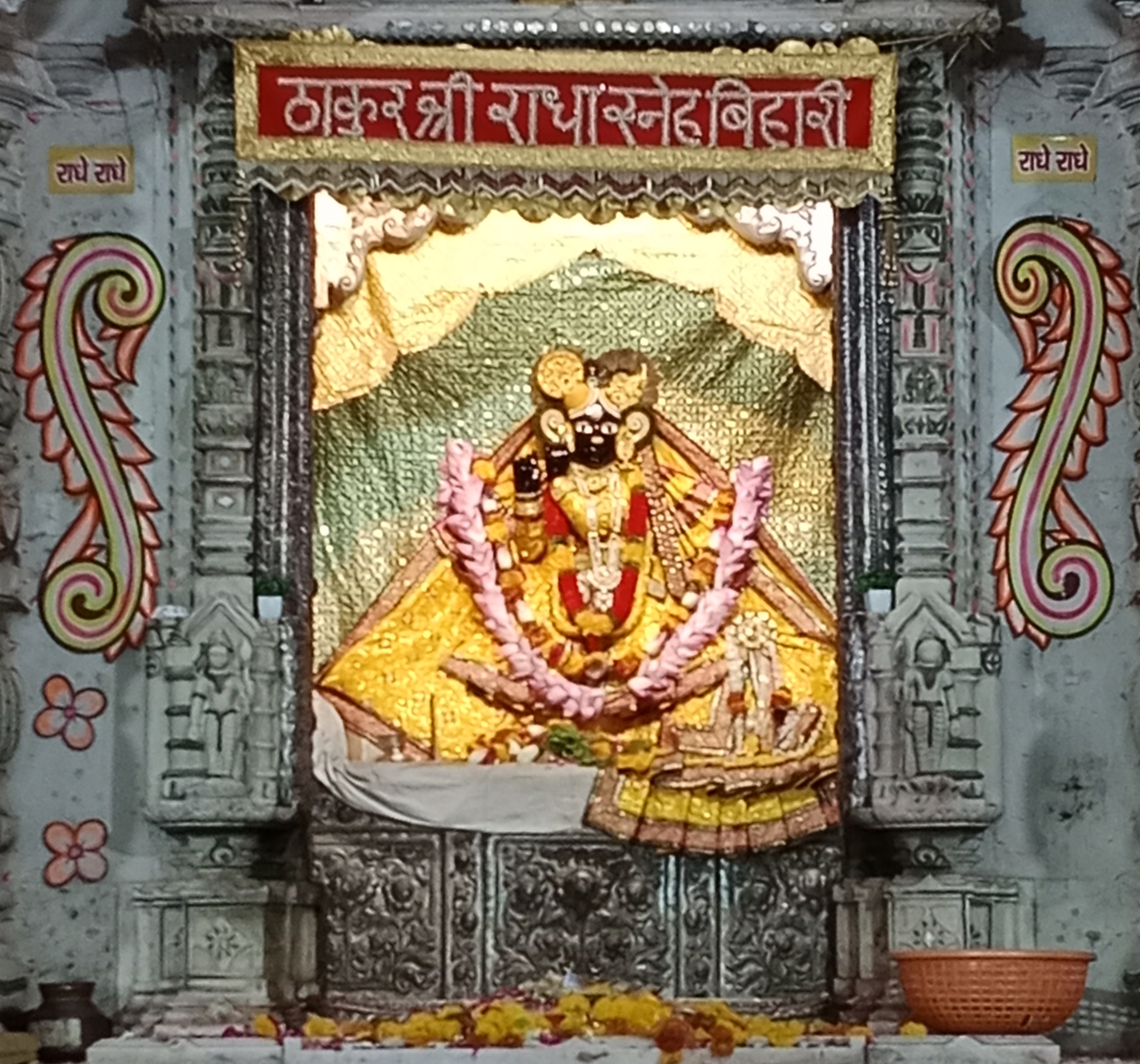
Vrindavan's most loved shrine, where a curtain is drawn across the image every few minutes so devotees do not stare too long. It is crowded and emotional, and best visited with a guide at a weekday opening time.
A white Italian marble temple opened in 2012, with carved panels of Krishna's life and gardens lit in changing colours after dark. It is spacious and calm compared with the old temples, and works well with children.
Pilgrims walk 21 km around Govardhan hill, which Krishna is said to have lifted. Along the way, the sandstone chhatris of Kusum Sarovar and the sacred tanks of Radha Kund are fine stops, even for those who drive.
One of India's best collections of early sculpture, with standing Buddhas, Jain tirthankaras and Kushan royal portraits in the local spotted red sandstone. An hour here explains why Mathura mattered long before the Mughals.
Experiences
Four hours to plan around


Getting there
How to reach Mathura and Vrindavan
Delhi (DEL) is the practical airport, about 160 km and 3 hours by the Yamuna Expressway. Agra's small airport (AGR) is about 65 km away, but has few flights; check current status before you travel.
Mathura Junction is on the main Delhi to Agra line, with fast trains from Delhi in about 2 hours. From the station, Vrindavan is 12 km by road.
From Agra, Mathura is about 58 km and Vrindavan about 70 km, roughly 1.5 hours on the national highway. From Delhi the Yamuna Expressway reaches Vrindavan in about 3 hours.
Where to stay
Rooms we book
Mathura and Vrindavan have no luxury hotels, and we prefer to say so. Most travellers stay at The Oberoi Amarvilas or ITC Mughal in Agra and visit for a long day, returning after the evening aarti. For Holi, or for travellers who want early-morning temple rituals, we book the best simple hotels in Vrindavan near the ISKCON temple, or in Mathura near the Krishna Janmasthan, choosing clean, quiet rooms over location. Expect basic comforts and vegetarian food only, often without alcohol.
From our planners
Five things to know
- Phones, cameras, bags and leather are not allowed in the Krishna Janmasthan complex; leave them in the car.
- Banke Bihari Temple becomes dangerously crowded on festival days and weekends; older travellers should visit on a weekday morning.
- Braj is strictly vegetarian, and alcohol and eggs are not served in most of Vrindavan and Mathura.
- Temple timings change by season and the temples close for several hours in the afternoon; plan visits with your guide.
- Monkeys in Vrindavan snatch glasses, phones and bags, so keep spectacles in a pocket and bags closed.
Questions travellers ask
Questions about Mathura and Vrindavan
How far are Mathura and Vrindavan from Agra?
Mathura is about 58 km and Vrindavan about 70 km north-west of Agra, roughly 1.5 hours by road. That makes a long day trip easy from The Oberoi Amarvilas or ITC Mughal. From Delhi the Yamuna Expressway reaches Vrindavan in about 3 hours, so Braj also fits between Delhi and Agra.
What is the difference between Mathura and Vrindavan?
Mathura is the larger town, where Krishna is said to have been born, with the Krishna Janmasthan complex, Vishram Ghat and an important sculpture museum. Vrindavan, 12 km north, is where he spent his youth, and is a town of temples, groves and ashrams. Most visitors see both in one day.
Is it worth staying overnight in Vrindavan?
For most travellers a day trip from Agra is enough. Staying a night or two suits those who want dawn and evening rituals, Holi celebrations or a slower pace. Hotels are simple and vegetarian, without luxury standards. We recommend overnight stays mainly during Holi week, when road traffic from Agra is heavy.
Can I take my phone into the Krishna Janmasthan?
No. Mobile phones, cameras, bags, leather items and food are not allowed inside the Krishna Janmasthan complex, and security checks are strict. Leave them with your driver. Lockers at the gate are often full. Check current status before you travel, as rules change with security conditions.
When is the best time to visit Mathura and Vrindavan?
October to March is comfortable. Holi, in late February or March, is the most famous time but also the most crowded. Janmashtami, Krishna's birthday in August or September, is a huge festival at midnight, but falls in the monsoon heat. For a quieter visit, choose a weekday in November, December or February.
What should I eat in Mathura and Vrindavan?
Everything is vegetarian. Mathura is known for its pedas, a milk sweet, and for kachori and jalebi at breakfast. The ISKCON temple restaurant in Vrindavan serves a clean, reliable lunch. Lassi and thandai, a spiced milk drink, are popular during Holi. Alcohol and eggs are generally not available.
Are there monkeys in Vrindavan?
Yes, and they are bold. Monkeys in Vrindavan are known for grabbing spectacles, phones and bags, and sometimes return them only in exchange for food. Keep glasses in a pocket or use a cord, hold bags close and avoid carrying open food. Your guide watches for them.
Is the Government Museum in Mathura worth a visit?
Yes, for anyone interested in Indian art. It holds one of the finest collections of Kushan and Gupta-period sculpture, including early standing Buddhas, Jain images and royal portraits in Mathura's spotted red sandstone. An hour is enough. Check opening days and hours before you travel.
How do Mathura and Vrindavan fit into a Taj Mahal trip?
Braj is the natural day trip on a Friday, when the Taj Mahal is closed, or on the drive between Delhi and Agra. A typical day leaves Agra at 7:30 am, spends the morning in Vrindavan, has lunch at ISKCON, visits Mathura in the afternoon and watches the aarti at Vishram Ghat before returning.
Journeys
Routes that stop in Mathura and Vrindavan
Nearby
Pair it with

The Taj Mahal, Agra Fort and the Mughal river bank

Akbar's red sandstone capital on a ridge west of Agra
Shape your own journey Tell us your dates and what you hope to feel. We draw the route around you. Begin Not sure where to start? We match the land to your month, your pace and the people travelling with you. Begin Talk to a planner A first route and an indicative price within one working day. No payment to start. Begin