Hanle
India's first dark sky reserve, high on the Changthang

Hanle lies in a wide valley of the Changthang plateau, about 255 km south-east of Leh and close to the Tibetan border. The air here is dry, thin and clear, with very little light from towns for hundreds of kilometres. That is why the Indian Institute of Astrophysics built the Indian Astronomical Observatory on a ridge above the village, at about 4,500 m, with the Himalayan Chandra Telescope at its centre.
In 2022 the area around Hanle was declared India's first dark sky reserve. Local villagers, many of them homestay hosts, have been trained as astronomy ambassadors and run night-sky sessions with telescopes for visitors. On a moonless night from September to November, or in midsummer gaps between clouds, the Milky Way is bright enough to cast faint shadows. Bring warm layers for the sessions; nights are cold year-round. Sessions are usually held near the homestays.
By day, Hanle offers a 17th-century Drukpa monastery on a hill, wetlands along the Hanle river where black-necked cranes breed, and plains where kiang graze. Accommodation is simple, mostly in homestays. Sleeping at 4,300 m demands careful acclimatisation, and permits are required. Check current status before you travel. Foreign nationals should check access before planning, as rules have varied. We plan Hanle for two nights. Pack thermals, a down jacket and gloves for the nights.
Highlights
What Hanle does best
Declared in 2022, the Hanle Dark Sky Reserve protects one of the darkest and driest skies in India. On moonless nights, local astronomy ambassadors set up telescopes outside their homes and guide visitors through planets, nebulae and star clusters.
On a ridge above the village, the white domes of the Indian Astronomical Observatory stand at about 4,500 m. The Himalayan Chandra Telescope, with a 2 m mirror, has worked here since 2001. Visits inside are limited and by permission only.
The Drukpa monastery on a rocky hill above the village dates from the 17th century, the reign of King Sengge Namgyal. A few monks live here, and the view over the wide valley is magnificent at sunset.
The marshes along the Hanle river are a breeding ground for black-necked cranes in summer, along with bar-headed geese and ruddy shelduck. Watch from a distance with binoculars, and never approach nesting birds. Summer is the breeding season.
The plains around Hanle hold kiang, Tibetan gazelle in a few areas, red fox and Tibetan wolf. Pallas's cat has been recorded in the area. With a local naturalist, early mornings can be very rewarding.
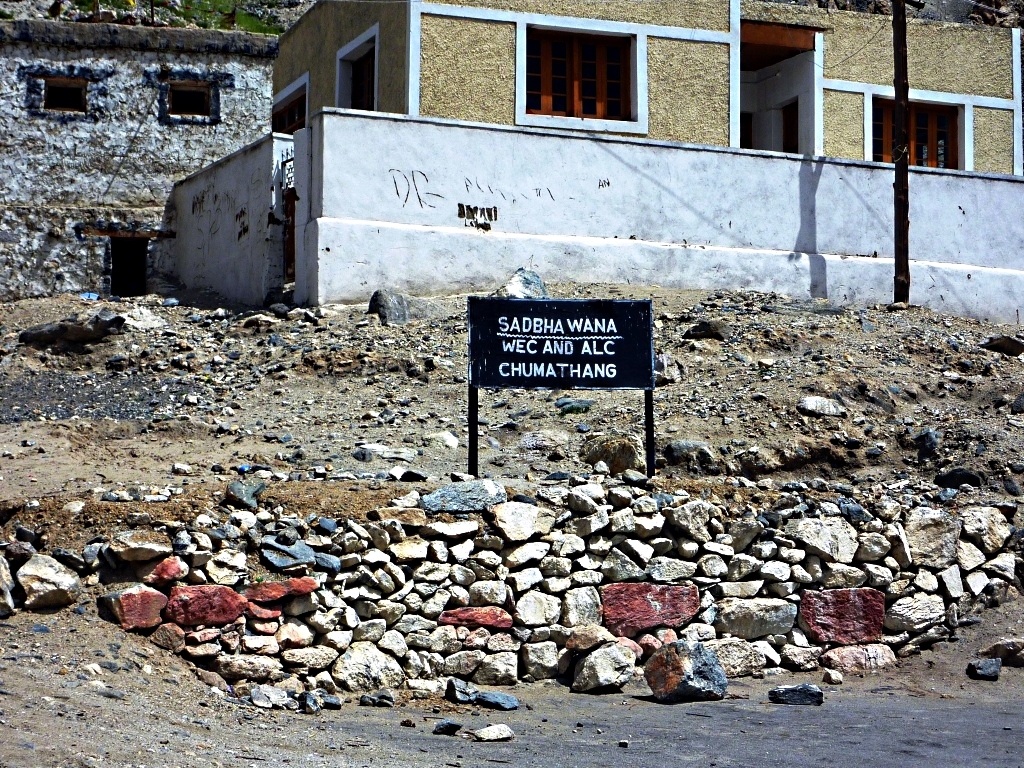
The drive from Leh follows the Indus past Upshi, Chumathang's hot springs and the grasslands of Nyoma. It is long but beautiful, with nomad camps and kiang beside the road. Allow about seven hours with stops.
Experiences
Four hours to plan around

Getting there
How to reach Hanle
The nearest airport is Leh (IXL), about 255 km away. Nyoma has an airfield used by the Indian Air Force, but there are no civilian flights.
There is no railway in Ladakh. The nearest useful stations are Jammu Tawi and Chandigarh, very far by road.
From Leh, follow the Indus via Upshi, Chumathang, Mahe and Nyoma to Loma, then turn to Hanle: ≈ 255 km and 7 h. From Tso Moriri it is ≈ 145 km and 5 h. From Pangong, a road via Chushul and Tsaga La has been opened to visitors with permits. Check current status before you travel.
Where to stay
Rooms we book
Hanle has no hotels of luxury standard. Most visitors stay in village homestays, several run by families who are trained astronomy ambassadors and keep telescopes at home. Rooms are simple and clean, often with shared or basic bathrooms, and meals are home-cooked. We choose the best homestay available, check heating and hot water, and bring extra bedding and comforts. A few small guesthouses and camps have opened in recent seasons. Check current status before you travel.
From our planners
Five things to know
- Plan Hanle around the new moon; a bright moon washes out most stars.
- Only sleep at Hanle after at least four nights in Ladakh, ideally after a night at a lower altitude.
- Wear every warm layer for stargazing; nights fall well below freezing even in August.
- Use a red torch outdoors and keep car headlights off near the observatory.
- Foreign nationals' access to Hanle has varied; check current status before you travel.
Questions travellers ask
Questions about Hanle
Why is Hanle famous for stargazing?
Hanle combines high altitude, dry air, a high number of clear nights and almost no light pollution, making it one of the best sites for astronomy in Asia. The Indian Astronomical Observatory was built here for those reasons, and in 2022 the area became India's first dark sky reserve.
Do we need a permit for Hanle?
Yes. Hanle is in a protected area near the Tibetan border. Indian nationals have needed an Inner Line Permit or online registration with fees, and foreign nationals' access has been restricted in some years. Check current status before you travel; we confirm before your trip.
How high is Hanle?
The village of Hanle is at about 4,300 m, and the observatory on the ridge above is at about 4,500 m. Sleeping here requires good acclimatisation. We only plan Hanle after at least four nights in Ladakh, often after Tso Moriri or Pangong.
When is the best time to visit Hanle?
September to November is best for stargazing, with clear skies and long nights. June to August is warmer and good for wildlife. Plan your nights around the new moon. Winter is possible for hardy travellers but nights fall to −25 °C.
Where should we stay in Hanle?
Hanle has village homestays, several run by trained astronomy ambassadors, and a few small guesthouses. There are no luxury hotels. We choose the best homestay available and bring extra bedding and comforts. Expect simple rooms and warm hospitality. Book early for new moon weeks.
Can we visit Hanle from Pangong?
Yes, a road via Chushul and Tsaga La has been opened to visitors with the right permits in recent years. It is about 200 km and seven hours from Spangmik to Hanle. Check current status before you travel; the route depends on permits and road conditions.
Is Hanle suitable for children?
Older children who are well acclimatised can enjoy Hanle, especially the stargazing. Younger children may find the altitude, cold nights and long drives hard. We suggest Hanle for children aged ten and above, late in a trip, with a doctor's advice.
Is there mobile network in Hanle?
Coverage in Hanle is limited, mainly from BSNL and sometimes Jio, and data can be slow or absent. Some homestays have Wi-Fi via satellite. Expect to be largely out of contact. Tell family before you go. Your guide carries a list of emergency contacts.
How many nights should we stay in Hanle?
Two nights is ideal, giving two chances of a clear night for stargazing and a full day for the monastery and wildlife. One night is possible but risky if clouds come in. Three nights suit keen astrophotographers. We plan Hanle around the new moon where possible.
Journeys
Routes that stop in Hanle

Nearby
Pair it with

A protected high lake at 4,522 m among Changpa nomads

A long blue lake at 4,225 m that runs into Tibet
Ladakh's capital at 3,500 m, and where every journey begins
Shape your own journey Tell us your dates and what you hope to feel. We draw the route around you. Begin Not sure where to start? We match the land to your month, your pace and the people travelling with you. Begin Talk to a planner A first route and an indicative price within one working day. No payment to start. Begin