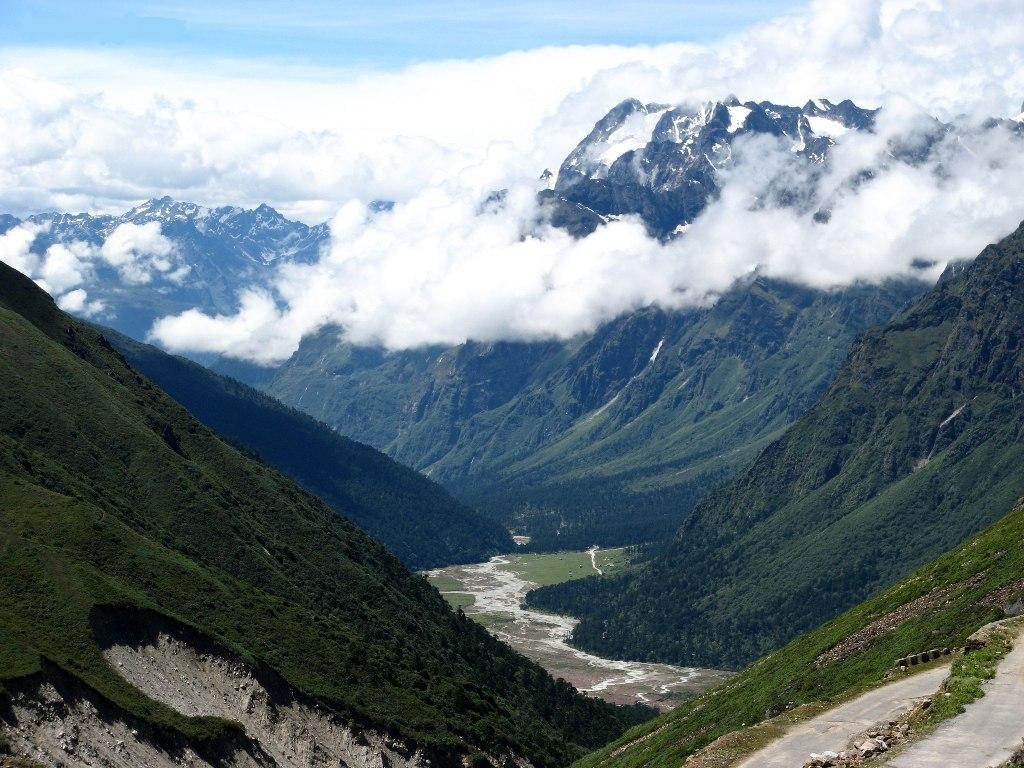
Lachung village, monastery and the Dzumsa

Lachung is built on terraces on both banks of the Lachung river, with wooden houses painted in muted colours, stone walls, prayer flags and apple orchards. The people are Lachungpa, of Bhutia heritage, who traditionally moved with their yaks between summer pastures and winter villages, and traded across the passes into Tibet before the border closed.
Village affairs are still regulated in part by the Dzumsa, a council headed by elected leaders called Pipons, which settles disputes, organises community work and sets rules on matters such as tourism and grazing. Your guide explains how it works and how it has adapted to change.
We walk up to Lachung Monastery, a Nyingma gompa above the village, built in the 19th century, with a prayer hall of painted columns and murals. Masked dances are held at certain festivals. On the way back we stop at a family house for tea and, in season, apples from the orchard.
Questions travellers ask
Good to know
What is the Dzumsa in Lachung?
The Dzumsa is the traditional village council of Lachung and Lachen, headed by elected leaders called Pipons. It regulates local affairs such as land use, grazing, festivals and tourism, alongside the formal government system. It is a distinctive feature of North Sikkim.
Is there a monastery in Lachung?
Yes. Lachung Monastery is a Nyingma gompa above the village, with a prayer hall decorated with murals and statues. Masked dances are performed at certain festivals. It is a short drive or uphill walk from the village.
What is there to do in Lachung?
Walk the village and orchards, visit the monastery, learn about the Dzumsa council, and use Lachung as a base for Yumthang Valley, its hot springs and, conditions permitting, Zero Point. Evenings are quiet, with mountain views and simple home cooking.
Also in Lachung and Yumthang, North Sikkim
More hours to plan around